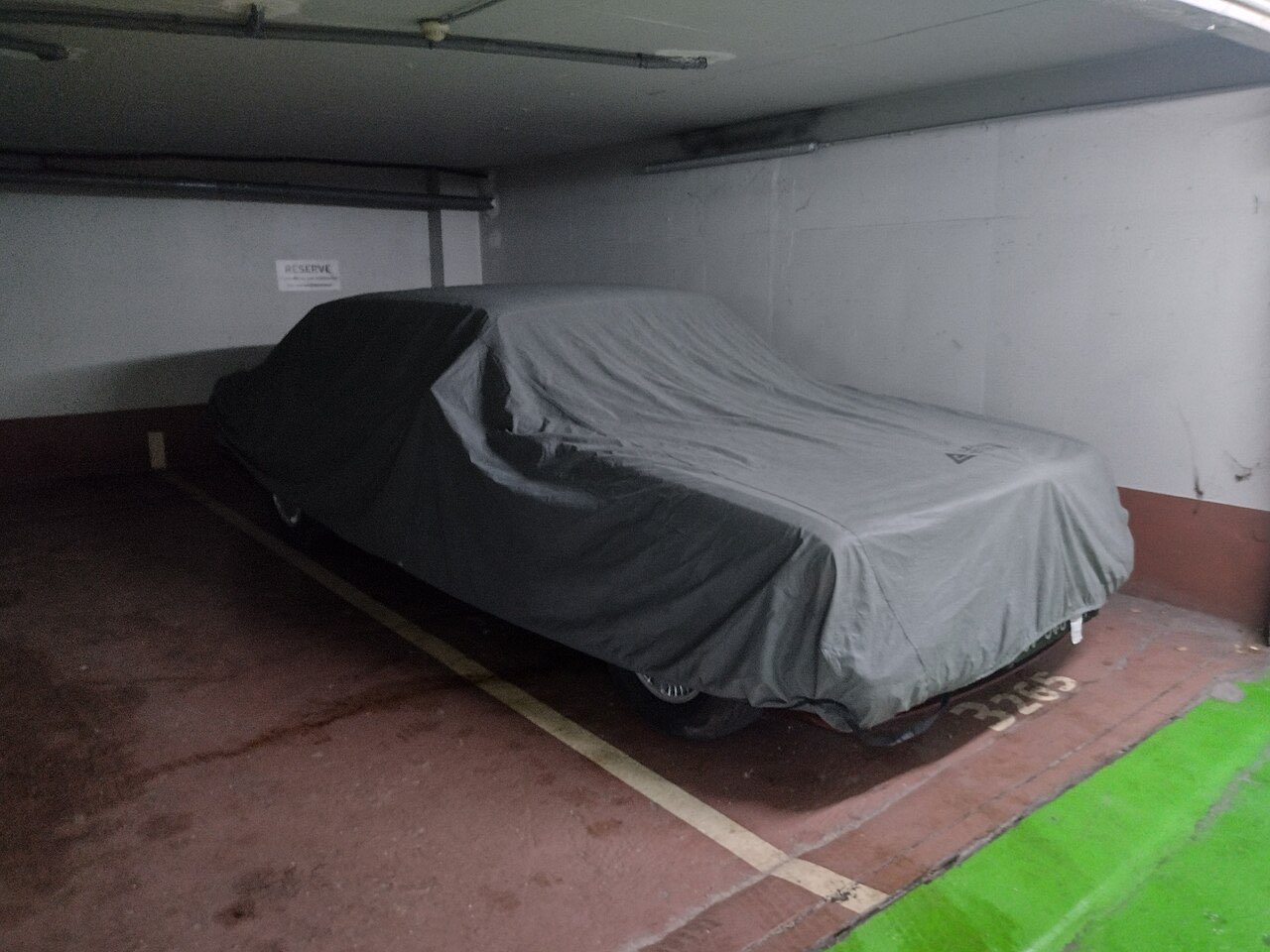
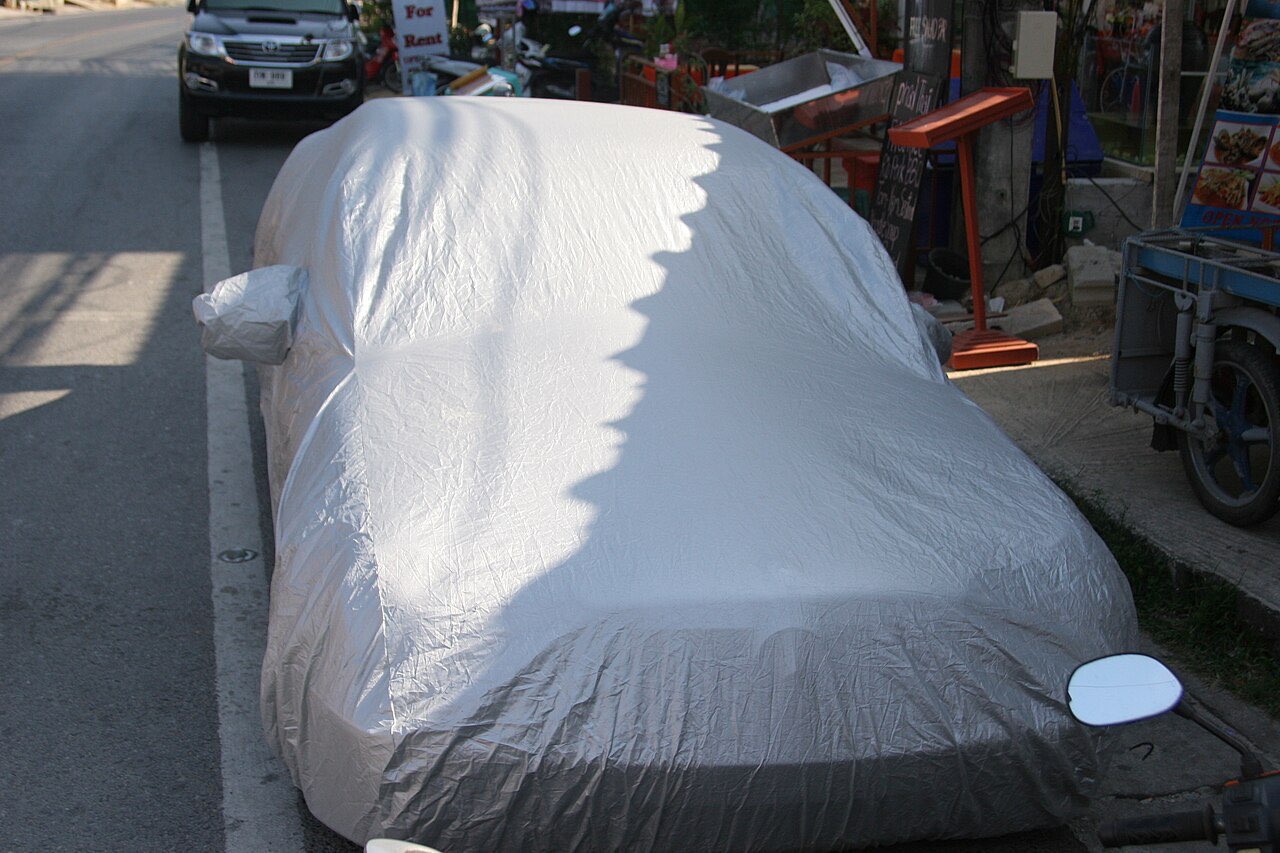
How to Measure Your Car for a Cover
In this guide
- The measurement that matters: bumper to bumper
- Or look the length up
- Width: leave the mirrors out, but do not forget them
- Height: body type does the work
- Antennas and other things that poke through
- Universal or custom: what you need to know for each
- Reading a listing with your number
- Mistakes that lead to a return
- If the car is also going in a garage
- Disclosure
To measure a car for a cover you need one number: the overall length, bumper to bumper, in a straight line, rounded up to the next whole inch. A 2027 Toyota Camry is 193.5 in long by Toyota’s specification, so the length to shop for is 194 in. Width and height matter far less than most people expect, because universal covers are sold by body type (sedan, SUV, truck) and length, and custom covers are ordered by year, make and model with no tape measure at all.
This guide covers how to take the measurement, what to do about mirrors, antennas and roof racks, and where to find a measured length for your model without leaving the house. Cover-sizing statements below come from pages we read on 15 November 2026 and are linked; vehicle dimensions come from this site’s own data.
The measurement that matters: bumper to bumper
Classic Accessories, which makes covers for cars, trucks and RVs, puts it in one line in its guide to measuring vehicles: “Length: Measure from bumper to bumper.” It gives the same instruction for sedans, trucks, SUVs, hatchbacks and station wagons, and says a width measurement is not needed because widths are standard for a given length.
The retailer Coverstore adds the detail that trips people up. Its measuring page says to measure “in a straight line across your vehicle” and not to follow the contours. A tape draped over the hood, roof and trunk reads far longer than the car is, and no size chart is built on that number.
How to do it in five minutes
- Park on level ground with the wheels straight.
- Lay the tape on the ground alongside the car. Coverstore suggests exactly this, and it keeps the tape straight.
- Mark the ground level with the furthest point of the front bumper and the furthest point of the rear bumper, then measure between the marks.
- Include anything that is always on the car and sticks out past the bumpers. Coverstore’s wording is “including bumpers, spare tires, and other accessories”. A rear-mounted spare or a bike rack you never remove counts, and CarCovers.com’s truck guide says the same of a hitch: “If you always have a hitch on the back, include that in your measurements.”
- Round up to the next whole inch. Coverstore: “Please round up your dimensions to the nearest inch.”
If the result is within an inch of the top of a size range, measure twice. An inch matters at the edge of a range and nowhere else.
Or look the length up
You may not need the tape. This site lists overall length for 619 models, taken from the maker’s published specification where we hold it and otherwise from the measurement a test lab recorded in the NHTSA vehicle crash test database. Every vehicle page shows a “cover length” figure, which is simply the listed length rounded up to a whole inch. Find your model here or browse by size on the length pages.
Ten popular models, each the newest row we hold:
| Vehicle (model year) | Body | Length | Shop for at least | Figure from |
|---|---|---|---|---|
| Toyota Corolla (2027) | Sedan | 182.3 in | 183 in | Toyota spec |
| Honda Civic (2027) | Sedan | 184.8 in | 185 in | Honda spec |
| Tesla Model 3 (2026) | Sedan | 185.8 in | 186 in | NHTSA lab |
| Toyota Camry (2027) | Sedan | 193.5 in | 194 in | Toyota spec |
| Honda Accord (2026) | Sedan | 195.7 in | 196 in | Honda spec |
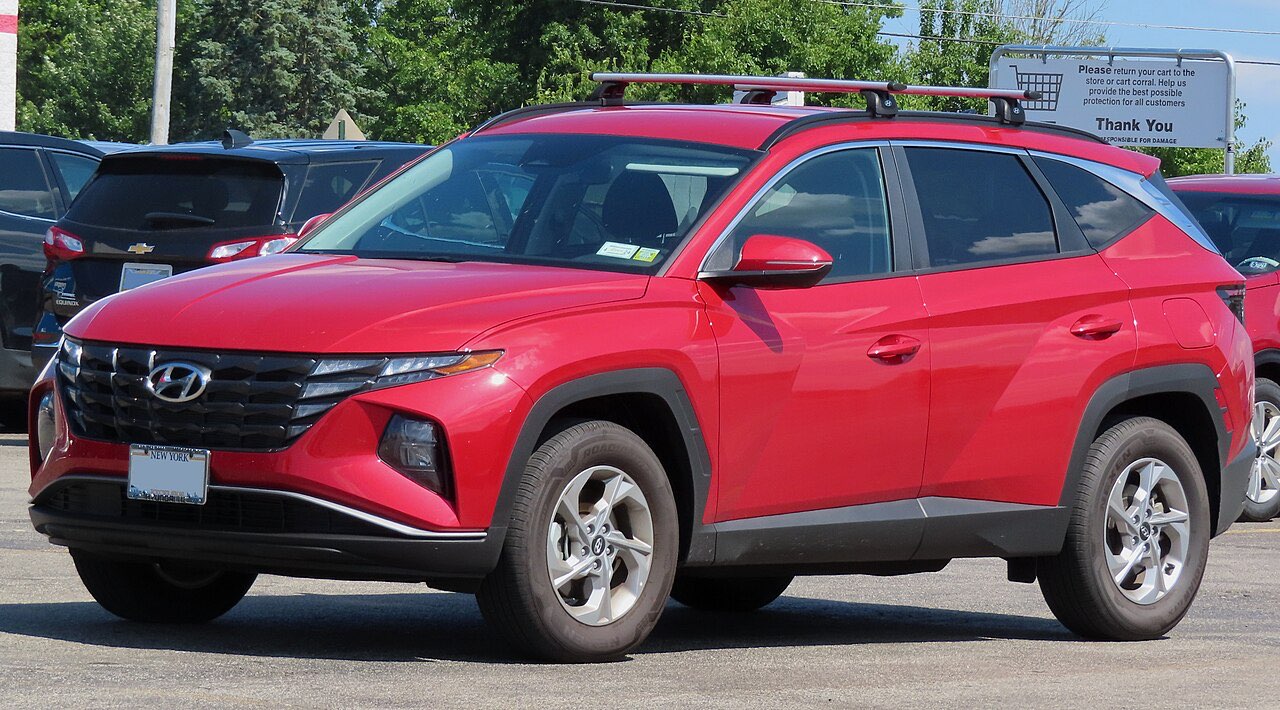
| Toyota RAV4 (2027, Woodland) | SUV | 182.0 in | 183 in | Toyota spec |
| Honda CR-V (2027) | SUV | 184.8 in | 185 in | Honda spec |
| Ford Explorer (2027) | SUV | 198.7 in | 199 in | Ford spec |
| Chevrolet Tahoe (2025) | SUV | 211.2 in | 212 in | NHTSA lab |
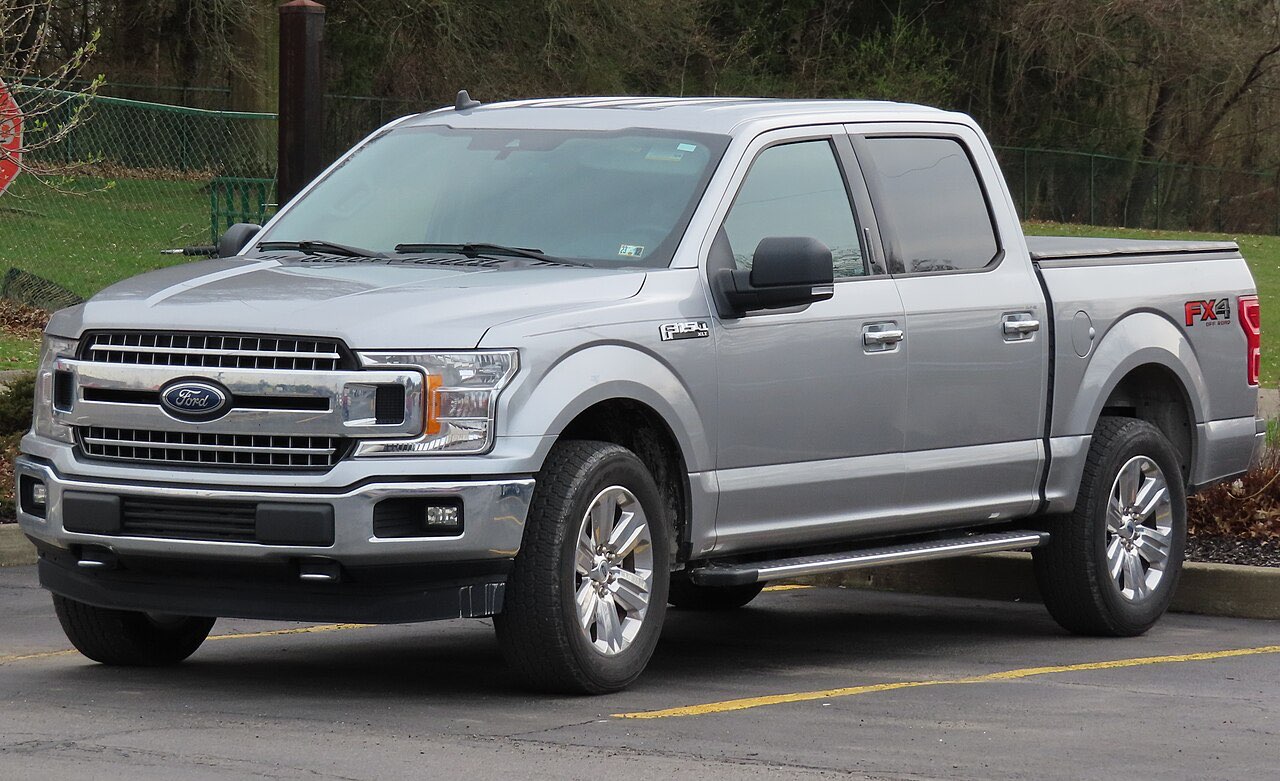
| Ford F-150 (2027, SuperCrew 6.5 ft box) | Pickup | 243.9 in | 244 in | Ford spec |
Two limits on a looked-up number. An NHTSA row is one tested vehicle of one trim, and a maker row is the configuration named on the vehicle page, so a sport bumper, a different trim or an aftermarket hitch can add length the table does not show. And pickups change by feet between cab and bed combinations, which is why they get their own guide.
Width: leave the mirrors out, but do not forget them
Both retailer guides we read say the same thing about width. Coverstore: measure “across the widest part of your car, including tires but not including side mirrors”. CarCovers.com’s truck guide: “don’t include your side mirrors”. Where a maker’s specification in our data states its basis, it is nearly always body width without mirrors, and an NHTSA lab width is body width too.
That does not make mirrors irrelevant. Where the maker publishes both figures, the difference is large:
| Vehicle (model year) | Body width | With mirrors | Mirrors add |
|---|---|---|---|
| Subaru Crosstrek (2027) | 70.9 in | 79.4 in | 8.5 in |
| Mazda CX-5 (2027) | 73.2 in | 81.8 in | 8.6 in |
| Subaru Outback (2027) | 74.0 in | 82.9 in | 8.9 in |
| Subaru Legacy (2025) | 72.4 in | 81.8 in | 9.4 in |
| Ford Explorer (2027) | 78.9 in | 89.3 in | 10.4 in |
| Ford Escape (2025) | 74.1 in | 85.6 in | 11.5 in |
| Ford F-150 (2027) | 79.9 in | 95.7 in | 15.8 in |
All seven rows are the makers’ own specifications, with the body width stated as excluding mirrors.
So mirrors stand 8.5 to 15.8 in outside the body on these seven vehicles, and the cover has to go around them somehow. There are two approaches. A custom cover is patterned with them in mind: Coverking’s help article on custom and universal covers says “most custom fit covers have mirror pockets”. A universal cover has no pocket in the right place, so the fabric has to stretch over the mirrors or the mirrors have to fold. If yours fold, folding them before the cover goes on takes that width away. If they do not, the top of a size range is where there is the least spare fabric to go around them, which is one more reason not to buy at the very edge of a range.
The practical point: you do not send a mirror measurement to anybody, but you should know whether your mirrors fold and whether the cover you are looking at has pockets.
Height: body type does the work
Height is the reason a sedan cover does not fit an SUV of the same length. Compare three vehicles that are all about 16 ft long:
| Vehicle (model year) | Length | Height |
|---|---|---|
| Toyota Camry (2027) | 193.5 in | 56.9 in |
| Toyota Highlander (2026) | 194.9 in | 68.1 in |
| Toyota 4Runner (2026, SR5) | 194.9 in | 72.6 in |
All three are Toyota’s specifications. The 4Runner is 1.4 in longer than the Camry and 15.7 in taller, so the fabric has to reach 15.7 in further down each side, about 31 in in total. A cover rated only by length would be far too short at the hem on the 4Runner, which is why listings pair a length with a body type.
You normally do not need to measure height yourself. Measure it only if you have added something on top: Coverstore says to take “the tallest point of your car from the ground up, including roof racks or other accessories”. A roof box or a lifted suspension is the case where a standard SUV cover of the right length comes up short at the sides.
Antennas and other things that poke through
A fixed mast antenna is the one part a cover cannot simply drape over. What the sources we read say:
- Custom covers are patterned around it. Covercraft says its covers are tailored to the exact year, make and model, “including mirrors, antennas, and other unique features”, and asks buyers to list special features such as roof racks, spoilers and wide mirrors when ordering (Covercraft help center).
- Universal covers leave it to you. The retailer listings we read for Classic Accessories’ OverDrive covers include an antenna reinforcement patch for the case where you “have to cut a hole for your vehicle’s antenna”.
If your antenna unscrews or retracts, taking it down before covering the car avoids cutting anything; your owner’s manual says whether it does. We could not find a maker’s statement on how much extra length to allow for a rear spoiler or wing, so we do not give a figure: if yours is large, measure the car with it and treat the result as the length.
Universal or custom: what you need to know for each
| Universal cover | Custom cover | |
|---|---|---|
| How it is sized | By body type and a length range | By year, make, model and trim |
| What you supply | Bumper-to-bumper length, rounded up | Exact vehicle details and add-ons |
| Sizes offered | “Around three to five” per line (Coverking) | One pattern per vehicle, sometimes several variants |
| Mirrors | No fitted pockets | Usually mirror pockets (Coverking) |
| Tape measure needed | Yes, or a looked-up length | No, unless the car is modified |
Coverking describes universal covers as “usually mass produced, in around three to five sizes”, each meant to fit a range of cars or SUVs. That is what makes the length so important: with only a handful of sizes, each one spans a wide band (the listed ranges we read run from 8 in to more than 40 in wide), and your car lands somewhere in the middle of one or on the edge of two. How those ranges work, and why the names differ between brands, is covered in universal car cover sizes explained.
Reading a listing with your number
Once you have a length, a listing’s size options make sense. The cover this site features, the NEVERLAND waterproof car cover, named its sizes this way when we read the Amazon listing on 15 November 2026: “Fit Sedan Length 175-183 inch”, “Fit Sedan Length 184-196 inch”, “Fit Truck Length 210-230 inch” and “Fit Truck Length 230-242 inch”.
Put the table above against those ranges:
- The Corolla at 182.3 in falls in the 175-183 in sedan size, with 0.7 in to spare.
- The Civic (184.8 in), Model 3 (185.8 in) and Camry (193.5 in) fall in the 184-196 in sedan size.
- The Accord at 195.7 in is inside the same size by 0.3 in. That is close enough to the limit that a tape measure on your own car is worth the five minutes.
- The RAV4, CR-V, Explorer and Tahoe are SUVs, and this listing names no SUV size, so it is the wrong product for them whatever their length.
That last point is the body-type rule in action: a 182.0 in RAV4 is shorter than a Corolla but 10.6 in taller (67.1 in against 56.5 in), and a sedan-cut cover is not made for that.
Mistakes that lead to a return
- Measuring over the roof. Sizes refer to straight-line length.
- Using the wheelbase. Wheelbase is axle to axle. The 2027 Camry’s is 111.2 in, more than 82 in short of its 193.5 in overall length.
- Rounding down. A 184.8 in car is not a 184 in car.
- Reading the cover’s dimensions as the car’s. Coverstore notes that its published dimensions “refer to size of cover”. Other listings state the vehicle length that fits. Check which one a listing means before comparing numbers.
- Ignoring body type. Length alone does not make a sedan cover fit an SUV.
- Trusting a looked-up length on a modified car. Hitches, bull bars, bike racks and rear spares are not in a maker’s specification.
If the car is also going in a garage
A cover is often the alternative to a garage, but if you use both, the same length decides whether you can walk around the car. The Camry in a 12 x 20 ft one-car garage leaves 240 - 193.5 = 46.5 in at one end by the builder’s stated size. Builders quote outside dimensions, so measure your own interior; standard garage sizes and what fits in each has the full method. Small differences between rivals matter here as well: the Accord is 2.2 in longer than the Camry.
Disclosure
As an Amazon Associate I earn from qualifying purchases. The link to the NEVERLAND cover in this guide is an affiliate link, and NEVERLAND pays us a bonus commission on it through Amazon Creator Connections. We have not tested the cover; it is cited for the size ranges its listing states. See the full disclosure.
Frequently asked questions
How do I measure my car for a car cover?
Measure the overall length bumper to bumper in a straight line along the ground, not over the roof, and round up to the next whole inch. A 2027 Toyota Camry is 193.5 in long by Toyota's specification, so you shop for a sedan cover rated for at least 194 in. Universal covers are sold by body type and length, so length is the one number most listings ask for.
Do I include the side mirrors when I measure for a car cover?
Not in the width. The retailer guides we read (Coverstore and CarCovers.com) say to measure width without the side mirrors, and makers publish body width the same way. Mirrors still add 8.5 to 15.8 in to the seven vehicles in our table, for example 79.9 in to 95.7 in on a 2027 Ford F-150, so a cover has to have room or pockets for them.
Should I round up or down when choosing a car cover size?
Round up. Coverstore's measuring guide says to round each dimension up to the nearest inch and, if no cover matches exactly, to choose one that is slightly larger. This site does the same: a car listed at 184.8 in, such as the 2027 Honda Civic sedan, gets a shop-for length of 185 in.
Do I need to measure width and height for a car cover?
Usually only length and body type. Classic Accessories' measuring guide asks for bumper-to-bumper length for sedans, trucks, SUVs, hatchbacks and wagons and says width is standard for the length. Height is handled by body type: a 2027 Camry sedan is 56.9 in tall and a 2026 Toyota 4Runner is 72.6 in, which is why sedan and SUV covers are sold separately.
Where can I find my car's exact length without a tape measure?
Look the model up on this site. Each vehicle page gives the length in inches from either the maker's published specification or an NHTSA test-lab measurement, says which one it is, and shows the cover length to shop for, which is that length rounded up to a whole inch. Trims and bumpers vary, so confirm with a tape if you are within an inch of a size limit.
What is the difference between a universal and a custom car cover?
A universal cover is cut for a range of vehicles: Coverking says they are usually mass produced in around three to five sizes. A custom cover is patterned for one year, make and model and, per Coverking, generally has mirror pockets. For a universal cover you need your length and body type; for a custom cover you need your exact year, model, trim and any add-ons.
Keep planning
- Universal Car Cover Sizes Explained
Universal car covers come in about three to five sizes per line, each a length range for one body type. How to read the ranges and why size names never match.
Updated Nov 2026 - What Size Cover Fits a Pickup Truck?
Full-size crew cabs with a short bed are 232 to 234 in long, but one pickup can vary by almost 3 ft. Truck lengths by cab and bed, matched to cover size ranges.
Updated Nov 2026 - Compact SUV Sizes Compared: Length, Width and Height
Nine compact SUVs side by side: maker-published length, width, height, cargo volume and towing, plus how each fits a one-car and two-car garage.
Updated Nov 2026