Standard Garage Sizes and What Actually Fits in Each
In this guide
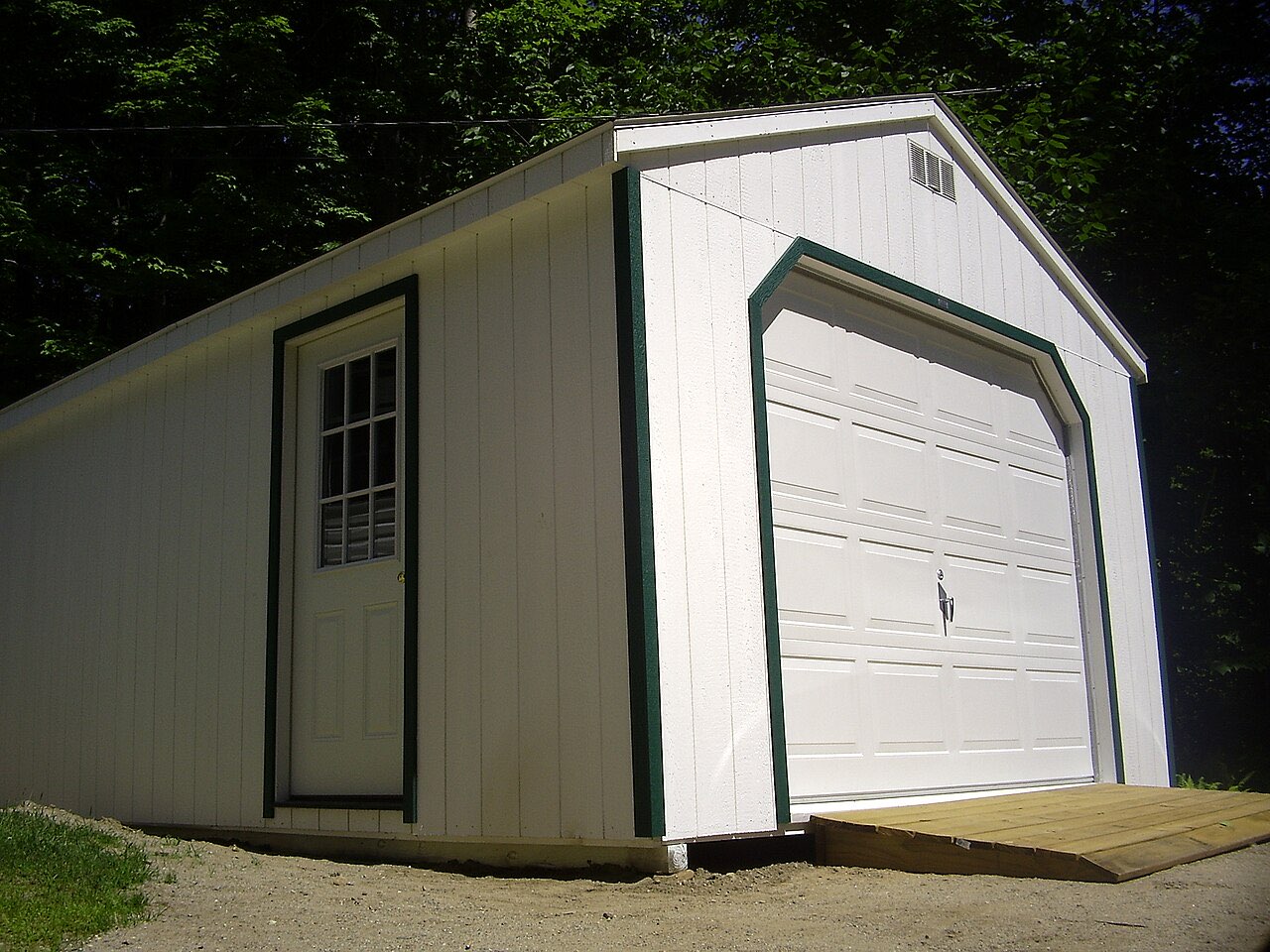
The standard garage sizes builders publish are 12 x 20 ft for one car and 22 x 22 ft for two cars, with a smaller minimum and a larger recommended size around each, and three-car garages run from 30 x 20 ft to 36 x 24 ft. What fits depends less on the car count than on the bay: a 12 x 20 ft one-car garage takes 281 of the 319 models in this site’s data with room to open the doors and walk past, while a 20 x 20 ft two-car garage takes only 112 per bay, because each car gets 10 ft of width instead of 12.
The garage sizes come from four builders: Viking Steel Structures, Trusscore, Boss Buildings and Horizon Structures, read on 2026-11-15. The vehicle dimensions are maker specifications or measurements from the NHTSA vehicle crash test database.
The nine published sizes
Sizes are width x depth. “Bay” is the width each vehicle gets when the garage is split evenly.
| Garage | Label | Bay width | Longest vehicle | Widest body | Fit / tight / no |
|---|---|---|---|---|---|
| 1-car 10 x 18 ft | Minimum | 120 in | 180 in | 72 in | 71 / 224 / 24 |
| 1-car 12 x 20 ft | Standard | 144 in | 204 in | 96 in | 281 / 32 / 6 |
| 1-car 14 x 22 ft | Recommended | 168 in | 228 in | 120 in | 305 / 13 / 1 |
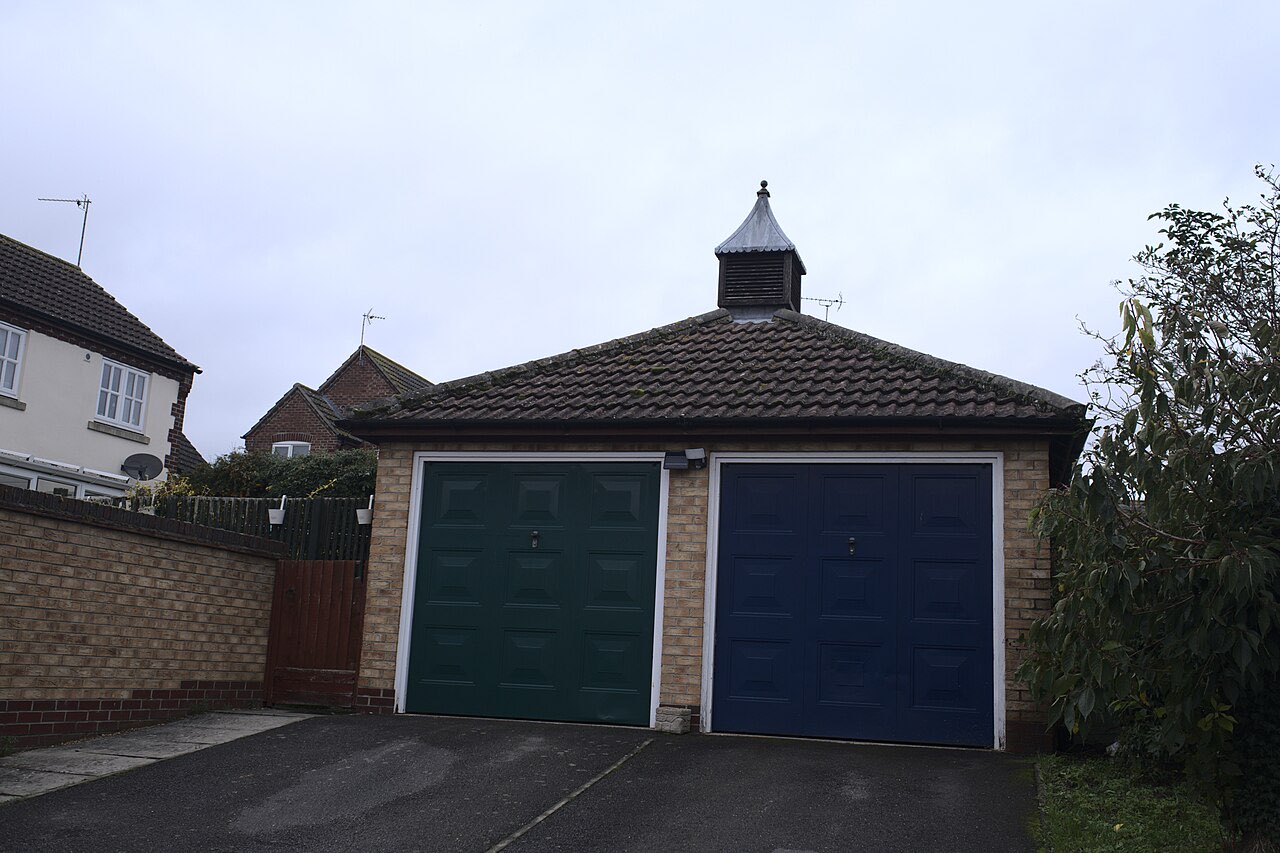
| 2-car 20 x 20 ft | Minimum | 120 in | 204 in | 72 in | 112 / 201 / 6 |
| 2-car 22 x 22 ft | Standard | 132 in | 228 in | 84 in | 303 / 15 / 1 |
| 2-car 24 x 24 ft | Recommended | 144 in | 252 in | 96 in | 316 / 3 / 0 |
| 2-car 24 x 30 ft | Deep | 144 in | 324 in | 96 in | 319 / 0 / 0 |
| 3-car 30 x 20 ft | Minimum | 120 in | 204 in | 72 in | 112 / 201 / 6 |
| 3-car 36 x 24 ft | Recommended | 144 in | 252 in | 96 in | 316 / 3 / 0 |
“Longest vehicle” and “widest body” are the largest that still keep the published clearances, explained below. The last column counts the 319 models in the data that have a row from 2012 or later, each on its newest row and, where a model year has several bodies, its longest. The garage fit index links to the full list behind every count.
Who says what:
- 10 x 18 ft: Viking lists it and adds, “Use this size only as an absolute last resort.”
- 12 x 20 ft: Viking and Boss Buildings call it standard; Trusscore gives it as the minimum.
- 14 x 22 ft: the low end of Viking’s recommended range, and the size Trusscore calls a better target.
- 20 x 20 ft: the two-car minimum from Viking and Boss Buildings.
- 22 x 22 ft: Viking’s standard two-car size.
- 24 x 24 ft: recommended by Viking, Boss Buildings and Trusscore.
- 24 x 30 ft: Viking’s pick for trucks and large SUVs.
- 30 x 20 ft and 36 x 24 ft: the three-car minimum (Viking, Boss Buildings) and the recommended size (Viking, Trusscore).
How “fits” is decided
Two published clearances set the rule. Viking calls for a minimum 2 ft aisle on each side for door opening, which is 24 in. Trusscore calls for at least 3 ft of walking space around a vehicle, which is 36 in, applied here at one end.
- One bay = garage width / cars across.
- Room each side = (bay - vehicle width) / 2.
- Room at the ends = garage depth - vehicle length.
Fits means at least 24 in each side and 36 in at one end. Tight means the vehicle goes in with less than that. No means it is longer or wider than the bay.
That is where the table’s limits come from. In a 12 x 20 ft garage the longest vehicle with a walkway is 240 - 36 = 204 in, and the widest body with both aisles is 144 - 48 = 96 in.
Worked example: a Toyota Camry in three garages
Toyota lists the 2027 Camry at 4,915 mm long and 1,839 mm wide: 193.5 in and 72.4 in.
- 10 x 18 ft: bay 120 in, depth 216 in. Each side: (120 - 72.4) / 2 = 23.8 in. End: 216 - 193.5 = 22.5 in. Tight on both counts.
- 12 x 20 ft: bay 144 in, depth 240 in. Each side: (144 - 72.4) / 2 = 35.8 in. End: 240 - 193.5 = 46.5 in. Fits.
- 20 x 20 ft, two cars: bay 240 / 2 = 120 in. Each side: 23.8 in. End: 46.5 in. Tight, by a fifth of an inch a side.
Outside versus inside dimensions
Builders quote the outside of the building. Horizon Structures says so directly, and the fit pages on this site repeat it for that reason. The inside is smaller by the thickness of the walls on each side, so every count in this guide is the best case for the stated size.
Anything stored along a wall comes out of the same allowance: shelving, bins, a workbench, bikes or steps into the house.
Measure wall to wall and from the inside of the closed door to the back wall, at the height of your bumpers and mirrors, then use those numbers instead of the nominal size.
Door sizes
Viking gives the standard one-car door as 9 x 7 ft, and describes a two-car garage as having one 16 x 7 ft door or two 9 ft doors. In inches:
| Door | Opening width | Opening height |
|---|---|---|
| One-car, 9 x 7 ft | 108 in | 84 in |
| Two-car single door, 16 x 7 ft | 192 in | 84 in |
Height is rarely the problem for a stock vehicle. Of the 319 models, 121 have a maker-published height, and none is over 84 in. The tallest are the 2027 Ram 2500 Crew Cab at 80.1 in, the 2025 Jeep Wagoneer at 79.7 in and the 2025 Ford F-150 Lightning at 78.5 in. The other 198 have no height in the data (NHTSA lab rows carry none), and a roof rack, cargo box, light bar or lift kit is never included.
Width through the door is a mirror question. Body widths exclude mirrors. Ford lists the 2027 F-150 at 79.9 in for the body and 95.7 in across the mirrors, which leaves 12.3 in in total through a 108 in door.
What fits, by vehicle type
Counts of models that fit with both clearances:
| Garage | Cars (132) | SUVs (155) | Pickups (23) | Vans (9) |
|---|---|---|---|---|
| 1-car 10 x 18 ft | 45 | 26 | 0 | 0 |
| 1-car 12 x 20 ft | 131 | 142 | 2 | 6 |
| 1-car 14 x 22 ft | 132 | 155 | 10 | 8 |
| 2-car 20 x 20 ft | 79 | 32 | 0 | 1 |
| 2-car 22 x 22 ft | 132 | 154 | 9 | 8 |
| 2-car 24 x 24 ft | 132 | 155 | 20 | 9 |
| 2-car 24 x 30 ft | 132 | 155 | 23 | 9 |
The three-car sizes match the two-car sizes with the same bay: 30 x 20 ft has the 20 x 20 ft counts and 36 x 24 ft has the 24 x 24 ft counts.
One-car garages
10 x 18 ft. A 180 in length limit and a 72 in width limit leave 71 models: small cars and subcompact SUVs such as the Mini Cooper convertible (151.1 in long, a 2020 NHTSA lab row) and the 2027 Hyundai Kona (171.3 in long, 71.9 in wide, Hyundai’s figures). A 2027 Toyota Corolla sedan at 182.3 in is already tight. Twenty-four models are longer than the 216 in garage: 17 pickups, six extended full-size SUVs and one full-size van.
12 x 20 ft. The 12 ft bay is as wide as each bay in a 24 x 24 ft garage, so width stops being the issue: every model in the data clears 24 in each side. Length decides it. All but one car fits (the 2027 Dodge Charger two-door at 206.6 in is tight), 142 of 155 SUVs fit, and the 13 that are tight are three-row and full-size SUVs from 204.5 in up. Only two pickups fit, the compact Ford Maverick and Hyundai Santa Cruz.
14 x 22 ft. With a 228 in length limit, every car and SUV fits and 10 of 23 pickups do. Twelve pickups and the full-size Ford Transit van are tight. The one model that does not go in is the Chevrolet Silverado 2500, a single 2024 lab row at 266.3 in.
Two-car garages
20 x 20 ft. Each car gets a 10 ft bay, so a body wider than 72 in is tight. That takes in 79 of 132 cars and only 32 of 155 SUVs. Nothing here is too wide to park, though: the six models marked “no” are long-bed and heavy-duty pickups over 240 in long. Will two SUVs fit in a two-car garage works through this size model by model.
22 x 22 ft. Two more feet each way moves 191 models from tight to fits. Every car and 154 of 155 SUVs fit; the exception is a single lab row for the 2026 Mercedes-Benz GLE350 at 84.3 in wide. Nine compact and midsize pickups fit. Full-size pickups go in but without a 36 in walkway.
24 x 24 ft. Everything fits except three trucks that are tight on length: the 2027 Toyota Tundra Double Cab long bed (252.5 in, 35.5 in at the end), the 2027 Ram 2500 Crew Cab with the 8 ft box (260.8 in, 27.2 in) and the Silverado 2500 (266.3 in, 21.7 in).
24 x 30 ft. All 319 fit. The extra 6 ft is what a heavy-duty truck or a back-wall workbench needs; see how deep a garage needs to be for a full-size truck.
The smallest garage for some common vehicles
“Smallest” is the smallest listed size where the vehicle has both clearances.
| Vehicle | Length | Width | Smallest 1-car | Smallest 2-car |
|---|---|---|---|---|
| 2027 Honda Civic sedan | 184.8 in | 70.9 in | 12 x 20 ft | 20 x 20 ft |
| 2027 Toyota Camry | 193.5 in | 72.4 in | 12 x 20 ft | 22 x 22 ft |
| 2027 Toyota RAV4 | 182.0 in | 74.0 in | 12 x 20 ft | 22 x 22 ft |
| 2027 Ford Explorer | 198.7 in | 78.9 in | 12 x 20 ft | 22 x 22 ft |
| 2026 Toyota Sienna | 203.7 in | 78.5 in | 12 x 20 ft | 22 x 22 ft |
| 2025 Chevrolet Tahoe | 211.2 in | 80.9 in | 14 x 22 ft | 22 x 22 ft |
| 2026 Ford Expedition MAX | 221.7 in | 80.0 in | 14 x 22 ft | 22 x 22 ft |
| 2026 Toyota Tacoma Double Cab, 6 ft bed | 226.2 in | 76.9 in | 14 x 22 ft | 22 x 22 ft |
| 2027 Ford F-150 SuperCrew, 6.5 ft box | 243.9 in | 79.9 in | none listed | 24 x 24 ft |
| 2027 Ram 2500 Crew Cab, 8 ft box | 260.8 in | 83.5 in | none listed | 24 x 30 ft |
The Tahoe row is an NHTSA lab measurement confirmed by three tests; the others are maker specifications. The length index groups models by how long they are. To put two models side by side, use the comparison pages.
Limits to keep in mind
- One vehicle per lab row. An NHTSA figure is the measurement of the single vehicle tested. Trims, bumpers and wheels differ.
- Maker figures are per configuration. The site counts each model on its longest newest body; a shorter cab or bed may fit where the table says tight.
- Widths exclude mirrors for lab rows and for makers that say so. Many maker rows do not say, and the site labels those “as published”.
- The clearances are published minimums, not comfort targets. A garage used for storage or a workshop needs more.
Choosing a size
- One vehicle, car or SUV: 12 x 20 ft fits 273 of the 287 cars and SUVs. Choose 14 x 22 ft for a three-row or full-size SUV, or for wall storage.
- Two vehicles: 22 x 22 ft is the smallest size where nearly every car and SUV fits with the doors able to open. 20 x 20 ft works for two small cars.
- A full-size pickup in the mix: 24 x 24 ft, or 24 x 30 ft for a heavy-duty truck.
- Three vehicles: 36 x 24 ft. The 30 x 20 ft minimum has the same narrow bays as a 20 x 20 ft garage.
If a vehicle ends up outside, how to measure your car for a cover uses the same length figures.
Frequently asked questions
What is the standard size of a one-car garage?
12 x 20 ft. Viking Steel Structures and Boss Buildings call it standard, and Trusscore gives it as the minimum. With 24 in each side for doors and 36 in to walk past one end, it takes a vehicle up to 204 in long and 96 in wide. Of 319 models checked, 281 fit on those terms, 32 are tight and 6 are too long.
What is the standard size of a two-car garage?
Builders publish 20 x 20 ft as the minimum, 22 x 22 ft as standard and 24 x 24 ft as recommended. The difference is large: 112 of 319 models fit a 20 x 20 ft bay with full clearance, 303 fit a 22 x 22 ft bay and 316 fit a 24 x 24 ft bay.
How big is a three-car garage?
30 x 20 ft at the minimum and 36 x 24 ft as the recommended size. A 30 x 20 ft garage gives three 10 ft bays, the same bay as a 20 x 20 ft two-car garage, so 112 of 319 models fit with full clearance. A 36 x 24 ft garage gives three 12 ft bays 24 ft deep, where 316 of 319 fit.
Are garage sizes inside or outside measurements?
Builders quote outside dimensions, as Horizon Structures explains. The usable interior is smaller by the thickness of the walls, so a 20 x 20 ft garage has less than 240 in of clear width and depth inside. Measure the inside of your own garage before relying on any fit table.
How wide and tall is a standard garage door?
Viking Steel Structures gives 9 x 7 ft as the standard one-car door, and one 16 x 7 ft door or two 9 ft doors for a two-car garage. A 7 ft opening is 84 in high. The tallest published height in this site's data is 80.1 in, for the 2027 Ram 2500 Crew Cab, so no stock model listed is taller than the opening.
Will a full-size pickup fit in a standard garage?
Not in the standard one-car or two-car sizes with walking room. The 2027 Ford F-150 SuperCrew with the 6.5 ft box is 243.9 in long, longer than a 20 ft garage and with 20.1 in to spare in a 22 ft one. It fits a 24 x 24 ft garage with 44.1 in at the end and 32.1 in each side.
Keep planning
- How Deep Does a Garage Need to Be for a Full-Size Truck?
A crew-cab half-ton is 232 to 246 in long, so it needs a 24 ft deep garage to leave a 36 in walkway. Depth by truck, cab and bed, from sourced lengths.
Updated Nov 2026 - Will Two SUVs Fit in a Two-Car Garage?
Two SUVs fit a 22 x 22 ft garage with door room; a 20 x 20 ft garage is tight for any SUV wider than 72 in. Sourced widths for 20, 22 and 24 ft.
Updated Nov 2026 - Compact SUV Sizes Compared: Length, Width and Height
Nine compact SUVs side by side: maker-published length, width, height, cargo volume and towing, plus how each fits a one-car and two-car garage.
Updated Nov 2026